Navigating Arizona Non-Compete Law: A Comprehensive Guide

In the fast-evolving business landscape of Arizona, non-compete agreements have become a focal point for companies aiming to protect their business interests and for employees navigating their career paths. These legal instruments are designed to prevent employees from entering into direct competition with their employers after the employment relationship ends. However, the enforceability of non-compete clauses in Arizona is subject to specific legal standards and judicial scrutiny. This article offers an in-depth analysis of Arizona non-compete law, outlining its key provisions, the balance between protecting business interests and ensuring employee freedom, and practical advice for drafting enforceable agreements.
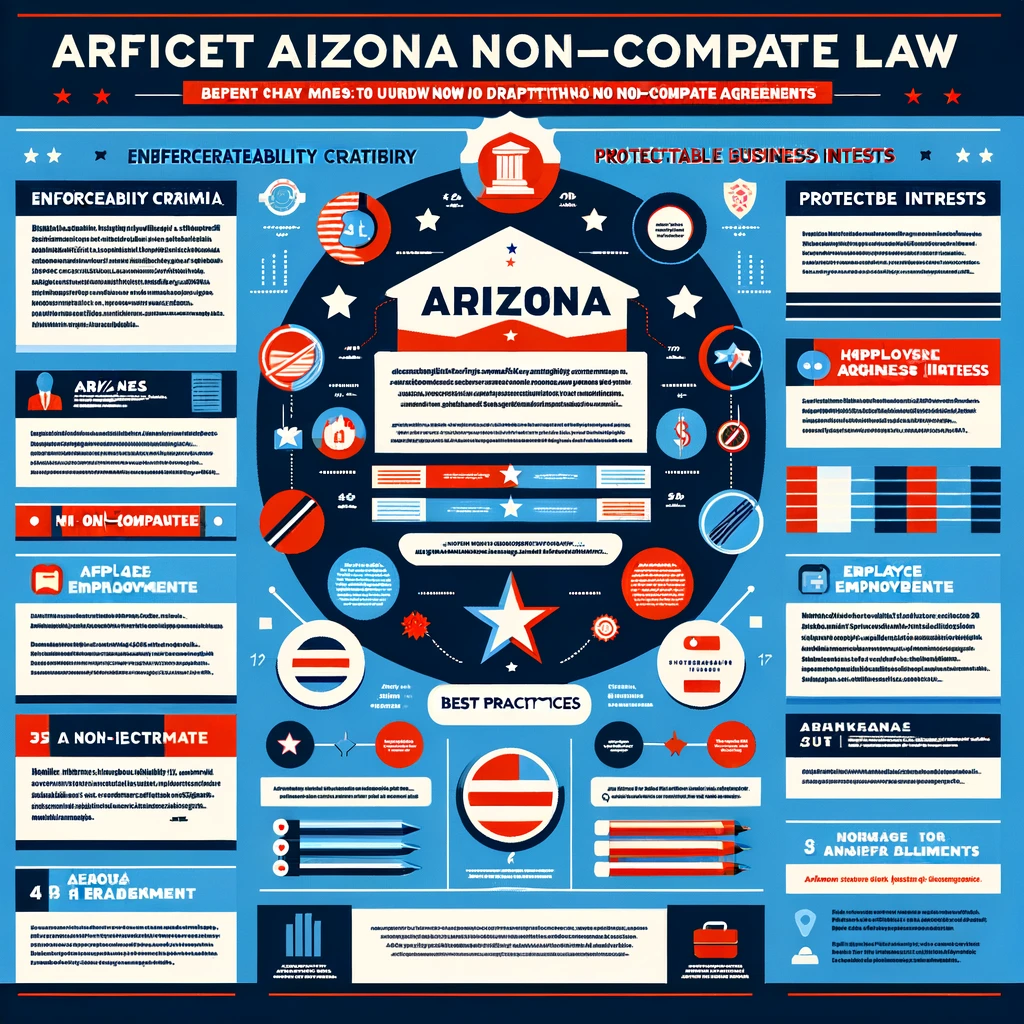
Overview of Arizona Non-Compete Law
Arizona non-compete law is governed by both statutory provisions and case law. The primary statute, Arizona Revised Statutes § 23-494 et seq., along with relevant case law, sets the framework for assessing the validity of non-compete agreements. The central tenet of Arizona's approach is the balance between an employer's legitimate business interests and an employee's right to work and pursue their profession.
Enforceability Criteria
For a non-compete agreement to be enforceable in Arizona, it must meet the following criteria:
Reasonable in Scope and Duration: The restrictions imposed by the non-compete agreement must be no broader than necessary to protect the employer's legitimate business interests, such as trade secrets, confidential information, or customer relationships. Typically, the duration of the restriction is scrutinized closely, with shorter periods being more likely to be upheld.
Does Not Impose Undue Hardship on the Employee: The agreement must not unreasonably restrict the employee's ability to find new employment or pursue their profession.
Not Against Public Policy: The agreement must serve a legitimate business purpose and not merely aim to restrict competition.
For an in-depth understanding of these criteria, the Arizona State Legislature's website provides access to the full text of relevant statutes.
Protectable Business Interests
Arizona courts have recognized several legitimate business interests that can be protected by non-compete agreements, including:
Protection of trade secrets
Preservation of confidential information
Retention of customer relationships and goodwill
Limitations and Exceptions
Arizona law also acknowledges certain limitations and exceptions to the enforceability of non-compete agreements. Notably, professions such as lawyers and doctors are subject to specific rules that limit the use of non-competes. Furthermore, overly broad or punitive non-competes are likely to be struck down or modified by the courts to make them reasonable and enforceable.
Drafting an Enforceable Non-Compete Agreement in Arizona
Best Practices
Tailor the Agreement to the Individual Employee: Generic non-compete agreements are less likely to be upheld. Tailor the scope, duration, and geographic limitations to the specific role and duties of the employee.
Consideration: Besides continued employment, consider offering additional consideration, such as a signing bonus, for the non-compete agreement, especially for existing employees.
Review and Update Regularly: Business needs and legal standards evolve. Regularly review and update non-compete agreements to ensure they remain enforceable and reflect current business interests.
Seeking Legal Advice
Due to the complexities of non-compete law and the potential for significant legal and financial consequences, it's advisable for both employers and employees to seek legal advice when drafting, signing, or challenging a non-compete agreement. Consulting with an attorney who specializes in employment law can provide tailored advice and ensure that the agreement complies with current Arizona law and judicial interpretations.

Create & Review Your Contracts 10x Quality and Ease
Lawyer-level AI handles all your contract needs, with real lawyers providing safeguarding support

Conclusion
Non-compete agreements in Arizona serve as a critical tool for protecting legitimate business interests. However, the enforceability of these agreements depends on their reasonableness and adherence to legal standards. Both employers and employees should approach these agreements with a clear understanding of their rights and obligations, informed by the latest legal precedents and statutory guidance.
For further research and resources, authoritative legal analysis can be found through academic publications and legal databases, such as Cornell Law School's Legal Information Institute or Arizona State University's Law Library.