The Ultimate Guide to Food Vendor Agreement Templates
In the bustling world of food vending, a well-crafted food vendor agreement is the backbone of a successful partnership between vendors and event organizers or property owners. This comprehensive guide will explore everything you need to know about food vendor agreement templates, ensuring your culinary ventures are legally safeguarded and operationally smooth. By incorporating authoritative links and expert insights, we aim to make this resource not only SEO-friendly but also incredibly informative and reliable.
Understanding Food Vendor Agreements
A food vendor agreement is a legal contract that outlines the terms and conditions between a food vendor and an event organizer, property owner, or manager. These agreements cover various aspects such as payment terms, operational hours, menu restrictions, and liability insurance requirements.
For a foundational understanding of contracts, the Cornell Legal Information Institute provides a wealth of knowledge on general contract law.
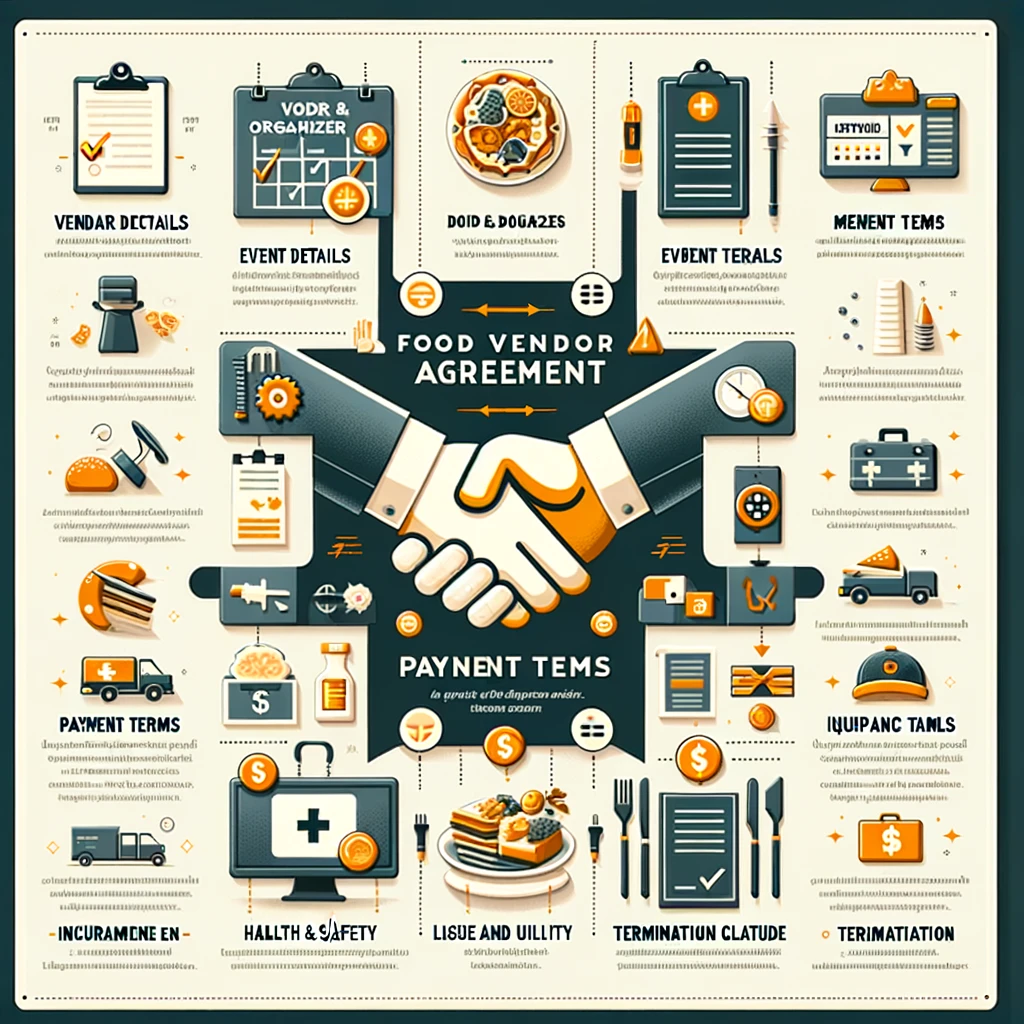
Key Components of a Food Vendor Agreement
1. Vendor and Organizer Details
Start with the basics: names and contact information of both parties. This sets the groundwork for a formal and identifiable agreement.
2. Event Details
Include specifics like event dates, locations, and operational hours. These details ensure both parties are clear about the event's scope and scale.
3. Payment Terms
This section should detail the fee structure, including any deposits required, payment schedules, and cancellation policies. Transparency here helps avoid future disputes.
4. Menu Items
To maintain event diversity and avoid menu overlap with other vendors, this clause specifies allowed menu items. Sometimes, organizers may request menu approval to align with event themes.
5. Health and Safety Requirements
Adherence to local health and safety standards is crucial. This part should reference relevant regulations, possibly linking to resources like the U.S. Food and Drug Administration's Food Code.
6. Equipment and Utilities
Clarify who provides necessary equipment and utilities (e.g., electricity, water) and the related costs if applicable.
7. Insurance and Liability
Vendors are typically required to have liability insurance. This section outlines coverage requirements and any indemnification clauses.
8. License and Permits
Ensure compliance by specifying required licenses and permits for food vending. For assistance, refer to Small Business Administration guidelines.
9. Termination Clause
Detail under what circumstances the agreement can be terminated by either party, including notice periods and any associated penalties.
Crafting Your Food Vendor Agreement
While templates offer a great starting point, customization is key to addressing the unique aspects of each vending opportunity. Here are some steps and considerations for crafting your agreement:
Review Local Laws and Regulations: Start by familiarizing yourself with local food service regulations, which can often be found on .gov websites like USA.gov's State Laws.
Consult with Legal Professionals: Tailor your agreement to fit your needs while ensuring legal compliance. Professional advice can be invaluable, especially for understanding liability and risk management.
Incorporate Clear, Concise Language: Avoid legal jargon where possible to ensure understanding from both parties. Clarity reduces the likelihood of disputes.
Include a Dispute Resolution Clause: Specify how disputes will be resolved, potentially saving time and resources should disagreements arise.
Update Regularly: Laws and business needs evolve. Periodically review and update your agreement to reflect these changes.

Create & Review Your Contracts 10x Quality and Ease
Lawyer-level AI handles all your contract needs, with real lawyers providing safeguarding support

Utilizing Templates: Pros and Cons
Pros:
Cost-Effective: Templates provide a cost-saving starting point compared to drafting an agreement from scratch.
Time-Saving: They offer a quick solution for businesses needing immediate documentation.
Cons:
Generic: Templates may not cover specific needs or comply with local laws.
Legal Validity: Without proper customization and review, template-based agreements may not hold up legally.
For templates and more detailed guidance, educational resources like the University of Michigan's Contracting Resources can be beneficial.
Conclusion
A food vendor agreement is more than just a formality; it's a crucial tool for defining expectations, duties, and protections for both vendors and organizers. By understanding and carefully drafting your food vendor agreement, you ensure a foundation for success and legal security in your food vending endeavors.
Remember, while templates can provide a useful starting point, customization and legal consultation are key to developing a robust agreement suited to your specific situation.
For further reading on food safety and vending regulations, FoodSafety.gov is an excellent federal resource offering guidelines and regulatory information.