Crafting the Ideal Texas Operating Agreement: A Step-by-Step Guide

In the vibrant business landscape of Texas, forming a Limited Liability Company (LLC) is a popular choice for entrepreneurs looking to blend the flexibility of a partnership with the liability protection of a corporation. Central to the formation and function of an LLC in Texas is the operating agreement. While not mandated by state law, this document is pivotal for defining the internal operations, financial decisions, and the overall governance structure of your LLC. This comprehensive guide will walk you through the essentials of creating a Texas operating agreement, ensuring it serves as a robust foundation for your business’s operations and growth.
Understanding Texas Operating Agreements
An operating agreement is a legal document that outlines the ownership structure, operating procedures, and financial arrangements of an LLC. In Texas, while the Texas Business Organizations Code does not require LLCs to have an operating agreement, having one in place is considered best practice. It not only offers a clear framework for business operations but also ensures that the LLC is governed by personalized rules, rather than default state laws.
Importance of an Operating Agreement in Texas
Clarity in Operations: It provides clear guidelines on the management structure and operational procedures, reducing potential conflicts among members.
Protection of Limited Liability Status: Helps reinforce the legal distinction between the LLC and its members, crucial for protecting personal assets.
Flexibility: Unlike corporate bylaws, an operating agreement offers flexibility in defining how the business operates, adapts, and grows.
Key Elements of a Texas Operating Agreement
A well-crafted Texas operating agreement should address several core areas:
1. Ownership Structure
Detail the percentage of ownership each member has in the LLC, often based on initial investment.
2. Member Roles and Responsibilities
Clarify the roles of each member, including management responsibilities and decision-making processes.
3. Capital Contributions
Outline the initial contributions of each member and the procedure for future contributions or distributions.
4. Profit and Loss Distribution
Specify how profits and losses will be allocated among members, typically in proportion to their ownership percentages.
5. Voting Rights and Procedures
Define the voting power of each member and the process for making major business decisions.
6. Membership Changes
Detail the process for adding or removing members, as well as procedures for member exits and transfers of interest.
7. Dissolution
Set forth conditions under which the LLC may be dissolved and the process for winding up business operations.
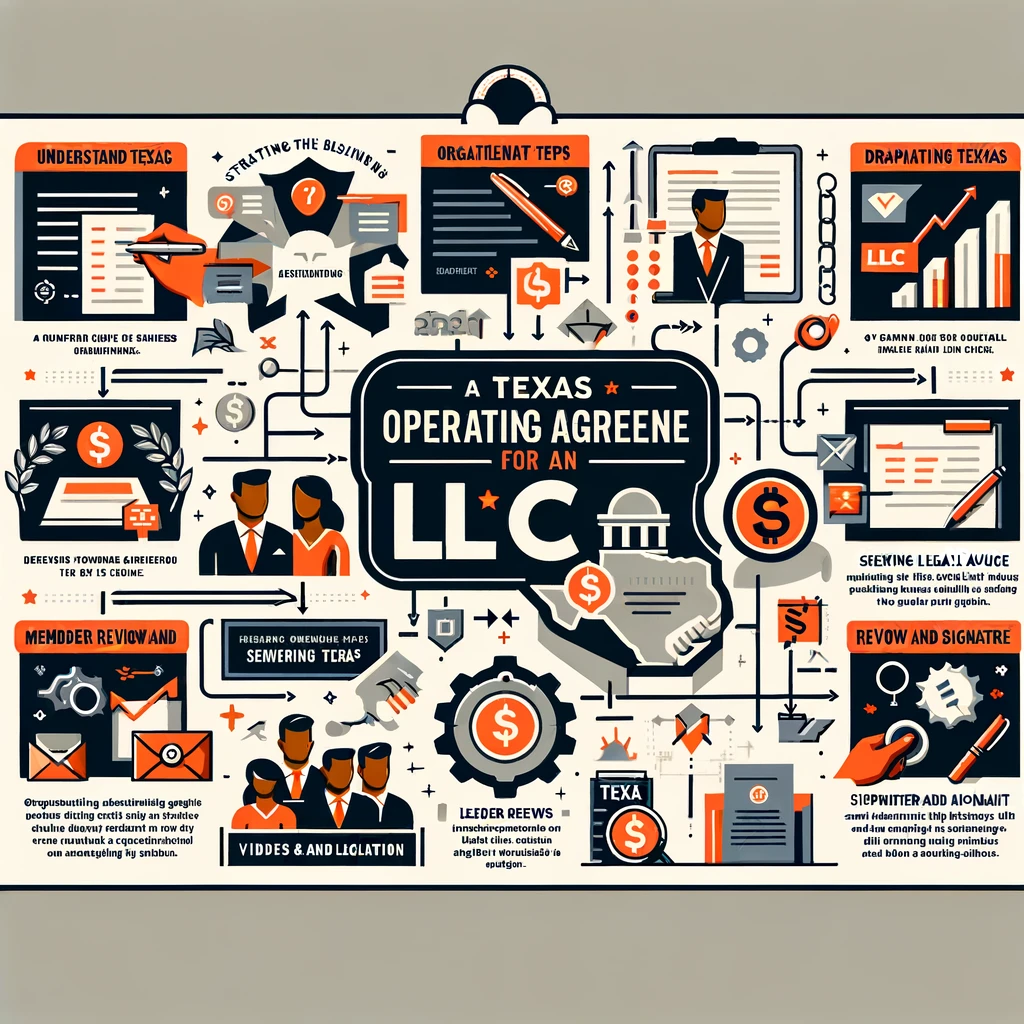
Drafting a Texas Operating Agreement: A Step-by-Step Approach
Step 1: Review Texas LLC Regulations
Begin by familiarizing yourself with the relevant provisions of the Texas Business Organizations Code, ensuring your operating agreement complies with state laws.
Step 2: Organize Key Business Details
Gather information on your LLC’s structure, members, and operational vision. This will form the basis of your agreement.
Step 3: Draft the Agreement
Utilize a template as a starting point, but customize it to fit your LLC’s unique needs. Consider each section of the template carefully, adapting it to accurately reflect your business operations.
Step 4: Seek Legal Advice
Have a legal professional review your draft to ensure it's comprehensive and compliant with Texas law. This step is crucial for identifying potential issues and safeguarding your LLC’s interests.
Step 5: Member Review and Signature
Share the draft with all members for review, discussion, and revision. Once consensus is reached, have all members sign the document to make it official.
Step 6: Store and Update as Necessary
Keep the signed operating agreement in a safe place and review it annually. Update the document as needed to reflect significant changes in the business structure or operations.

Create & Review Your Contracts 10x Quality and Ease
Lawyer-level AI handles all your contract needs, with real lawyers providing safeguarding support

Resources and Legal Assistance
For those drafting an operating agreement in Texas, several resources are available:
Texas Secretary of State: Offers guidelines and resources for starting and managing an LLC in Texas.
Texas Law Libraries: Provide access to legal databases and resources that can assist in researching state laws relevant to LLCs.
Legal Aid Organizations: Offer support and guidance for small businesses and entrepreneurs, potentially including assistance with operating agreements.
Conclusion
While the process of drafting a Texas operating agreement might seem daunting at first, it's a pivotal step in establishing clear guidelines for your LLC’s operation and governance. By taking a thoughtful, step-by-step approach to crafting your agreement, you can create a solid legal foundation that supports your business’s growth and success. Always remember, consulting with legal professionals to review and refine your operating agreement is invaluable in ensuring its effectiveness and compliance with Texas law.