Comprehensive Guide to Understanding Pre-Employment Background Check Sample Reports

In the intricate world of hiring and recruitment, pre-employment background checks stand as critical tools for employers aiming to make informed decisions. Understanding the intricacies of a background check sample report is essential for employers to interpret the results accurately and for job seekers to know what information may be assessed about them. This article delves deep into the components of a pre-employment background check sample report, illuminating its significance, legal considerations, and the implications it holds for the employment process. By referencing authoritative resources, this guide aims to offer a thorough understanding and enhance the credibility of the information provided.
The Essence of Pre-Employment Background Checks
What is a Pre-Employment Background Check?
A pre-employment background check is a process an employer uses to verify the information provided by a job applicant. It can include various checks, such as criminal records, employment history, education verification, and credit history. The purpose is to ensure the candidate's suitability for the position, reducing potential risks to the company and its employees.
For a broader understanding of background checks, the U.S. Equal Employment Opportunity Commission provides guidelines on how these checks should be performed in a manner that complies with federal laws, accessible here.
Legal Framework Governing Background Checks
The Fair Credit Reporting Act (FCRA) is a federal law that outlines the rights of applicants and the responsibilities of employers when conducting background checks using third-party agencies. Additionally, various state laws may impose additional requirements or restrictions.
To comprehend the legal intricacies, reviewing the guide provided by the Federal Trade Commission on using consumer reports for employment purposes is recommended, available here.
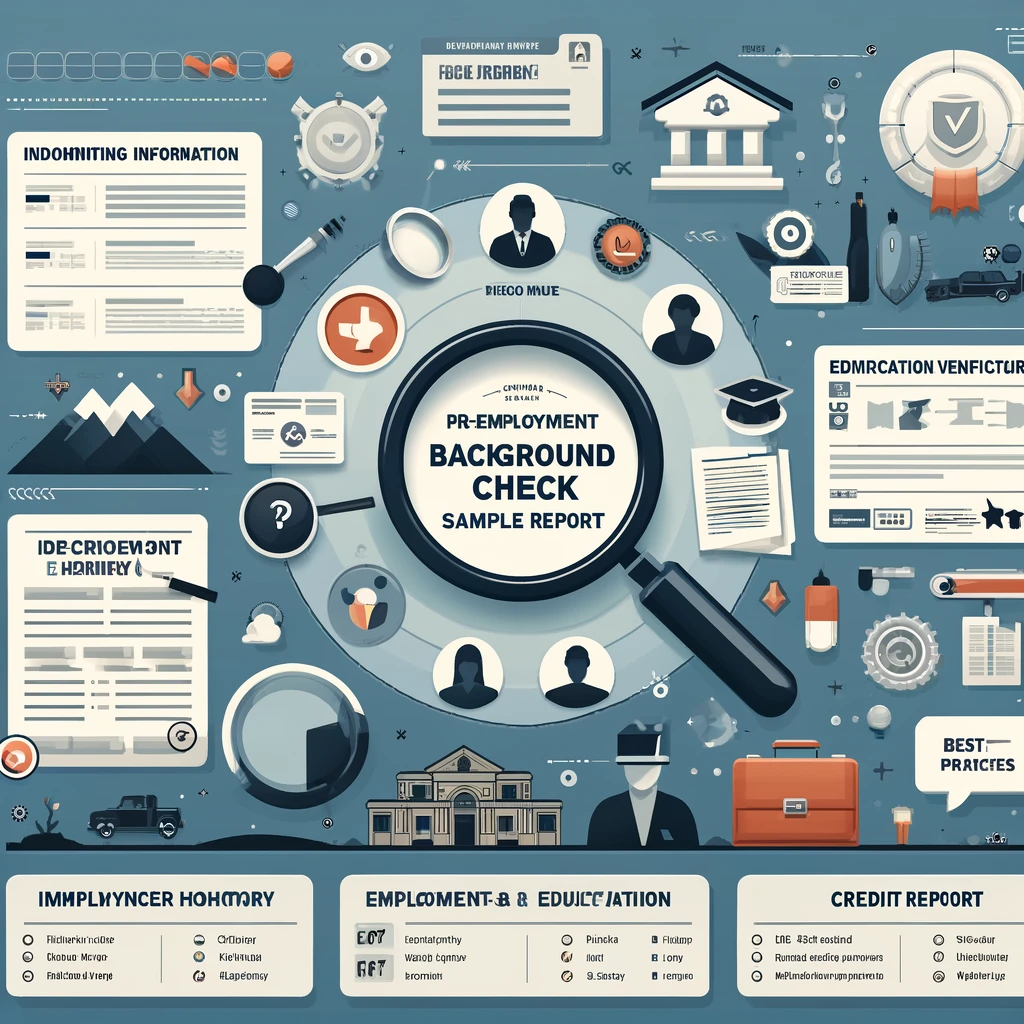
Anatomy of a Background Check Sample Report
Identifying Information
This section contains the applicant's basic information, such as full name, date of birth, Social Security Number, and address history. It serves as the foundation for all subsequent checks.
Criminal History
The criminal history section lists any criminal records associated with the applicant, including misdemeanors, felonies, and any pending legal actions. It's vital to understand the nature and relevance of any findings in relation to the job role.
Employment and Education Verification
Employment verification confirms the applicant’s previous job positions, dates of employment, and roles. Education verification checks the validity of degrees and certifications claimed. These verifications ensure the candidate possesses the qualifications and experience stated in their application.
For guidelines on conducting employment verification, the National Association of Professional Background Screeners (NAPBS) provides resources and best practices, which can be found here.
Credit Report
Though not always included, a credit report may be relevant for positions involving financial responsibilities. It provides insight into the applicant's financial stability and reliability.
Additional Checks
Depending on the position, additional checks such as driving records, professional license verifications, and drug screening results may also be included in the sample report.
Best Practices for Employers
Ensuring Compliance
Employers must adhere to the FCRA and relevant state laws when conducting background checks. Obtaining written consent from the applicant and providing pre-adverse and adverse action notices, if applicable, are mandatory steps to ensure compliance.
Interpretation and Use of Information
Understanding how to interpret the findings accurately and fairly is crucial. Employers should assess the relevance of any negative information in the context of the job requirements and provide the applicant an opportunity to dispute inaccuracies.
Privacy and Security
Safeguarding the confidentiality and security of the information obtained during background checks is paramount. Employers should only share the results with individuals who have a legitimate need to know.

Create & Review Your Contracts 10x Quality and Ease
Lawyer-level AI handles all your contract needs, with real lawyers providing safeguarding support

Conclusion
Pre-employment background checks are invaluable for making well-informed hiring decisions. By understanding how to interpret a background check sample report correctly, employers can navigate the complexities of the hiring process more effectively, ensuring a safe and compliant workplace. For job applicants, knowing what these reports entail can help in preparing for and responding to any concerns that arise.
As the landscape of employment law evolves, staying informed through reputable sources, such as the Society for Human Resource Management (SHRM), becomes indispensable for both employers and applicants alike.